Commodity Shorts,

South American crude rises as a strategic pillar in Europe's post-Russia energy shift

By Leander Vogler

The first Commodity Shorts: since 2022, Europe has been pushing to reduce its reliance on Russian and Middle Eastern oil, and South America's rising output and competitive costs make it a credible long-term supplier. The piece looks at Guyana's Stabroek Block, Brazil's Foz do Amazonas basin and Argentina's Vaca Muerta field.

Published
Format
Commodity Shorts, 5 slides
Author
Leander Vogler
Focus
Energy Markets

Slides (5)

  1. Slide 1 of 5

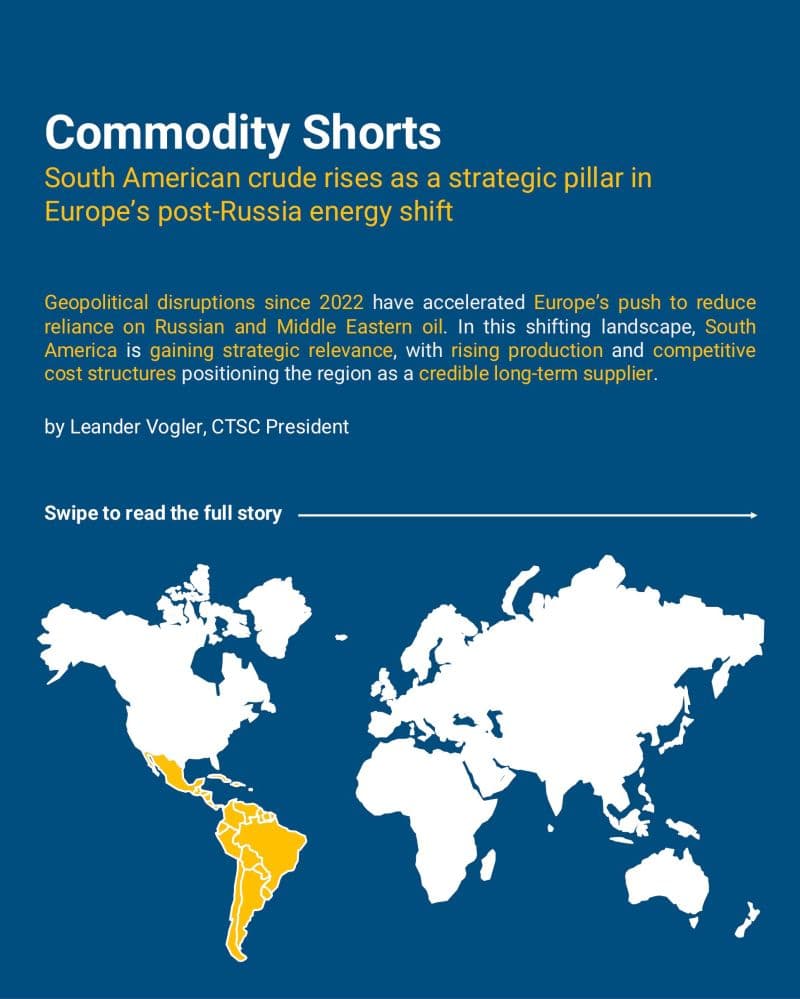
    Commodity Shorts title slide: “South American crude rises as a strategic pillar in Europe's post-Russia energy shift”. Geopolitical disruptions since 2022 have accelerated Europe's push to reduce reliance on Russian and Middle Eastern oil; with rising production and competitive cost structures, South America is positioned as a credible long-term supplier. By Leander Vogler. World map with Latin America highlighted.
  2. Slide 2 of 5

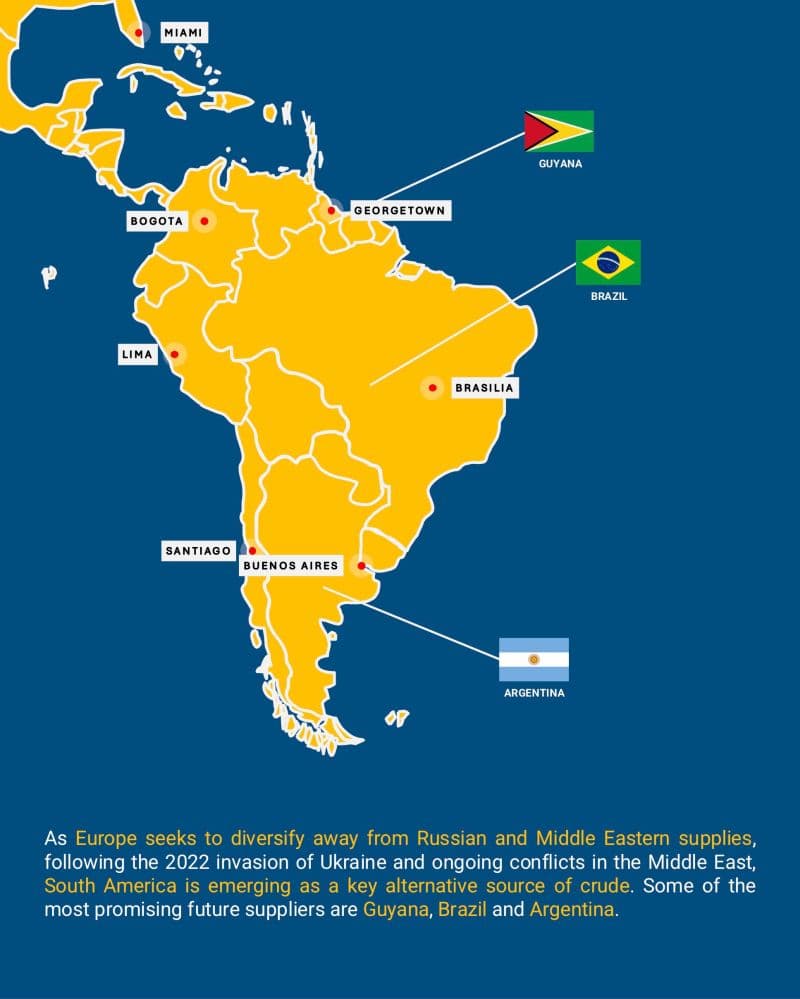
    Map of South America marking Guyana, Brazil and Argentina. As Europe seeks to diversify away from Russian and Middle Eastern supplies, following the 2022 invasion of Ukraine and ongoing conflicts in the Middle East, South America is emerging as a key alternative source of crude; some of the most promising future suppliers are Guyana, Brazil and Argentina.
  3. Slide 3 of 5

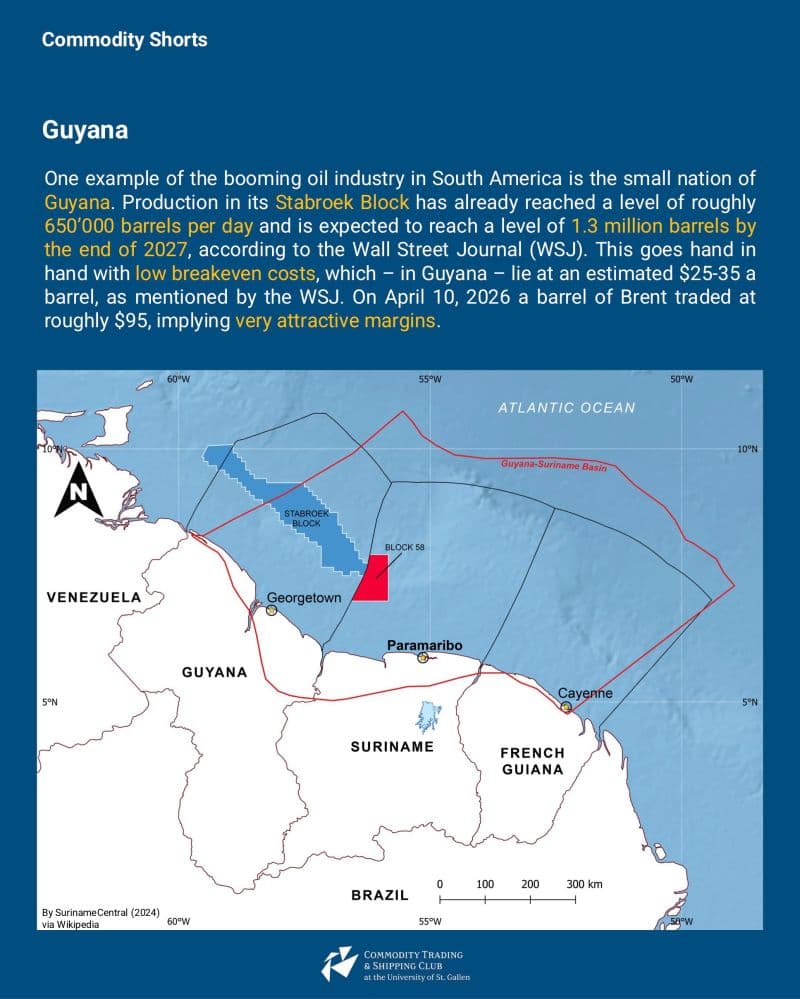
    Guyana: production in the Stabroek Block has reached roughly 650,000 barrels per day and is expected to reach 1.3 million barrels per day by the end of 2027, according to the Wall Street Journal. Breakeven costs are estimated at 25 to 35 dollars a barrel, while Brent traded at roughly 95 dollars on 10 April 2026, implying very attractive margins. Map of the Guyana-Suriname Basin showing the Stabroek Block and Block 58.
  4. Slide 4 of 5

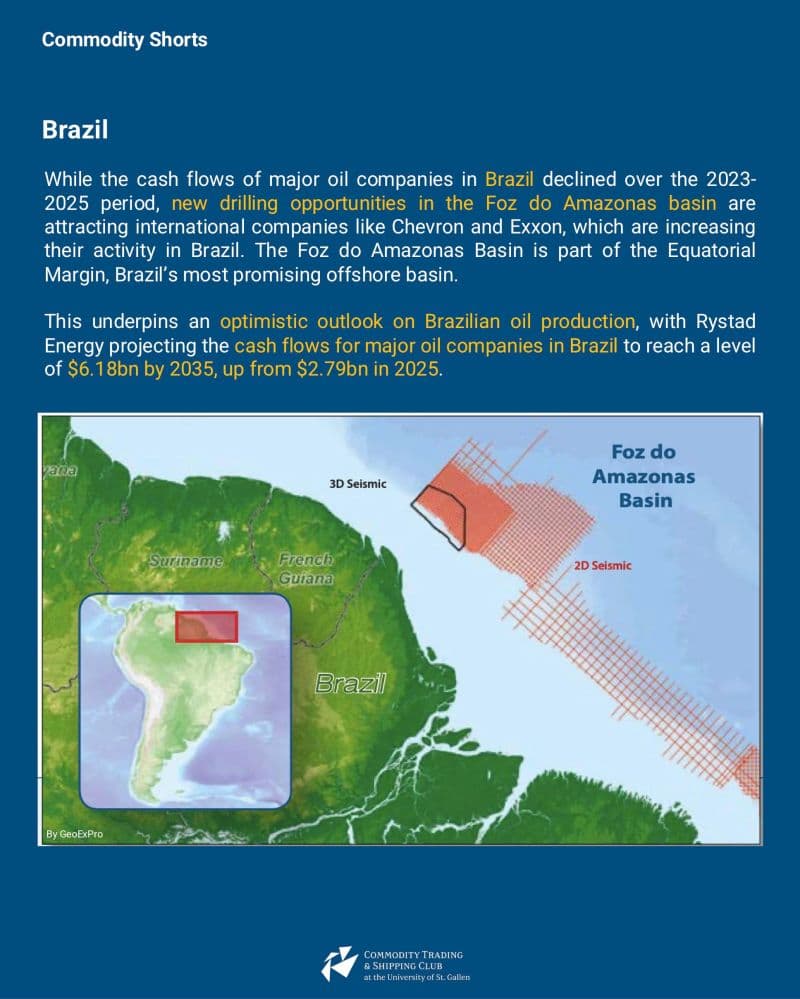
    Brazil: while cash flows of major oil companies in Brazil declined over 2023 to 2025, new drilling opportunities in the Foz do Amazonas basin, part of the Equatorial Margin, are attracting companies such as Chevron and Exxon. Rystad Energy projects those cash flows to reach 6.18 billion dollars by 2035, up from 2.79 billion in 2025. Map of 2D and 3D seismic survey areas in the Foz do Amazonas Basin.
  5. Slide 5 of 5

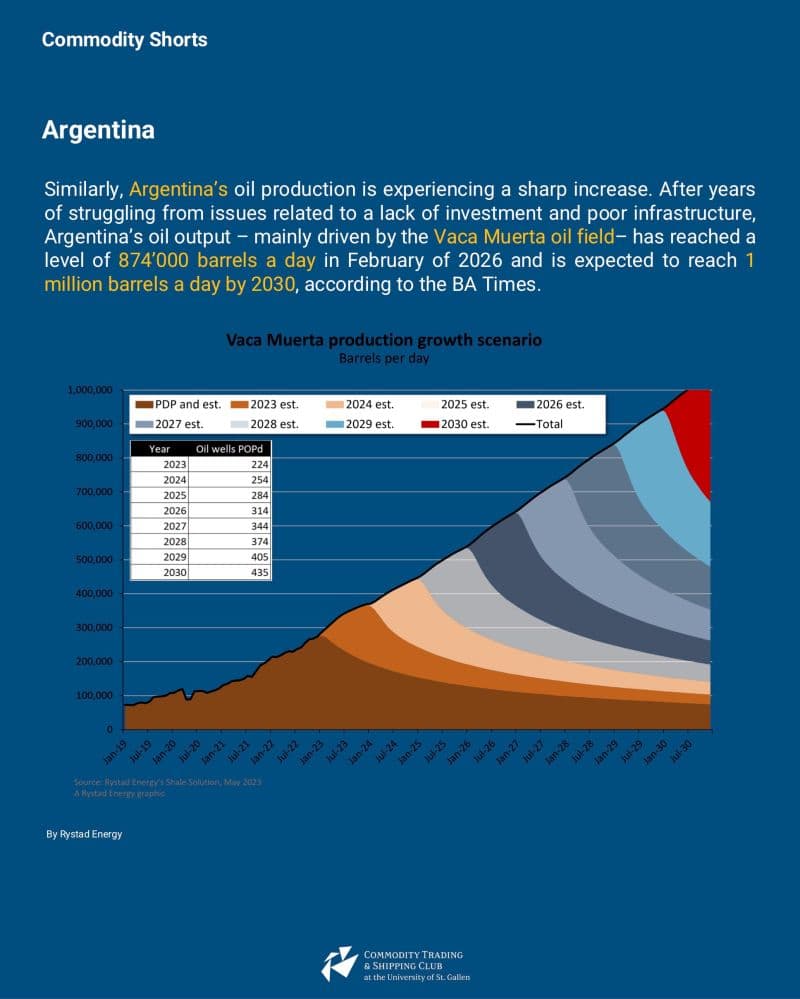
    Argentina: driven mainly by the Vaca Muerta field, oil output reached 874,000 barrels a day in February 2026 and is expected to reach 1 million barrels a day by 2030, according to the BA Times. Chart: Rystad Energy's Vaca Muerta production growth scenario, rising towards 1,000,000 barrels per day by 2030.